
How to Treat Dry Skin Naturally: 7 Soothing Steps
Table of Contents
- Why Dry Skin Happens and What Makes It Worse
- Step 1: Build a Natural Skincare Routine for Dry Skin
- Step 2: Cleanse Gently and Skip Harsh Products
- Step 3: Choose the Best Natural Moisturizer for Dry Skin
- Step 4: Adjust Bathing and Showering Habits
- Dry Skin Home Remedies That Actually Help
- How to Soothe Itchy Dry Skin and Irritation
- Dry Skin vs Eczema: When to See a Doctor
- Frequently Asked Questions
Last Updated: October 21, 2026
Why Dry Skin Happens and What Makes It Worse
To treat dry skin, you need to understand it is a loss of water from the outer layer faster than your skin can replace it. That sounds simple. The fix is where most people go wrong.
At Windsor & Johnston, we offer a premium collection of organic, vegan, and cruelty-free skin, hair, and body care products meticulously crafted from the Yorkshire countryside.
The Skin Barrier and Moisture Loss
Your skin barrier is the thin outer layer that holds water in and keeps irritants out. When it weakens, moisture escapes and skin feels tight, rough and flaky.
Three things break that barrier down:
- Hot water strips the oils that seal it
- Harsh soaps remove those oils faster than skin can replace them
- Cold, dry air pulls water straight out of the skin
So the goal isn't just adding moisture. It's protecting the barrier so moisture stays put.
Environmental and Household Triggers
Central heating, air conditioning, wool clothing and long hot showers all make dry skin worse. So do fragranced laundry detergents and household cleaners.
A common mistake is blaming the weather alone. In practice, the biggest trigger is often the shower you take every morning.
Step 1: Build a Natural Skincare Routine for Dry Skin
A natural skincare routine for dry skin needs three steps, done in the right order: cleanse gently, add water-based hydration, then seal it in with an oil or rich cream. Order matters more than the number of products.

Here is the sequence, and how to adapt it:
Morning (2 minutes)
- Rinse with lukewarm water only, or use a gentle cleanser if you feel oily or sweaty overnight.
- While skin is still damp, apply a hydrating layer (a humectant-rich serum, aloe, or a light lotion).
- Seal with a few drops of facial oil or a rich cream. If you wear makeup, give the oil two or three minutes to absorb first.
- Apply sunscreen last, as the final step before makeup. Sun damage weakens the barrier over time, so this is part of dry-skin care, not separate from it.
Evening (5 minutes)
- Cleanse with a gentle, non-foaming cleanser and lukewarm water to remove sunscreen, sweat, and grime.
- Apply your hydrating layer while skin is still damp.
- Seal with a richer oil or cream. Evening is the time for your heaviest product, because you are not layering makeup over it.
- Once or twice a week, add a thin layer of an occlusive balm on the driest patches (cheeks, around the nose, lips) as the very last step.
After bathing or showering (the most important window)
- Pat skin almost dry with a towel, leaving it slightly cool and damp.
- Apply body oil or cream within about three minutes, before skin fully dries. This is when skin absorbs the most and loses the least.
- For the face, follow the same damp-skin rule, then seal.
Face versus body
- The face has thinner skin and more oil glands, so it usually tolerates lighter oils (jojoba, squalane) and lighter creams. The body can take richer butters and balms.
- The body has fewer oil glands on the shins, forearms, and lower back, which is why those areas flake first. Give them the richest product.
- Hands and feet need occlusives more than humectants, because they are washed and exposed constantly.
The damp-skin step is the one people skip. Applying product to dry skin means you are moisturizing the surface, not the skin itself.
Step 2: Cleanse Gently and Skip Harsh Products
The best cleanser for dry skin is a non-foaming, fragrance-free formula that leaves skin feeling comfortable, not squeaky.
What to avoid:
- Foaming gels and anything with "purifying" on the label
- Alcohol-based toners
- Fragranced products, including natural essential oil blends that irritate
A gentle cleanser once in the evening is often enough for dry skin. In the morning, lukewarm water alone works for many people.
Watch out for "natural" labels too. Citrus oils and menthol feel fresh but can sting sensitive, dry skin. Fragrance-free matters more than botanical.
Step 3: Choose the Best Natural Moisturizer for Dry Skin
The best natural moisturizer for dry skin combines three types of ingredient: humectants to pull in water, emollients to soften, and occlusives to seal it all in. One product rarely does all three well, so look for a formula that lists more than one.
Humectants, Emollients and Occlusives
These three words explain almost every moisturizer on the shelf:
| Ingredient type | What it does | Natural examples |
|---|---|---|
| Humectant | Pulls water into the skin | Honey, aloe vera, glycerin |
| Emollient | Softens and smooths | Jojoba oil, shea butter, avocado oil |
| Occlusive | Seals moisture in | Petroleum jelly, cocoa butter |
Dry skin needs all three. A humectant alone can actually draw water out of skin in very dry air, so it needs an occlusive on top.
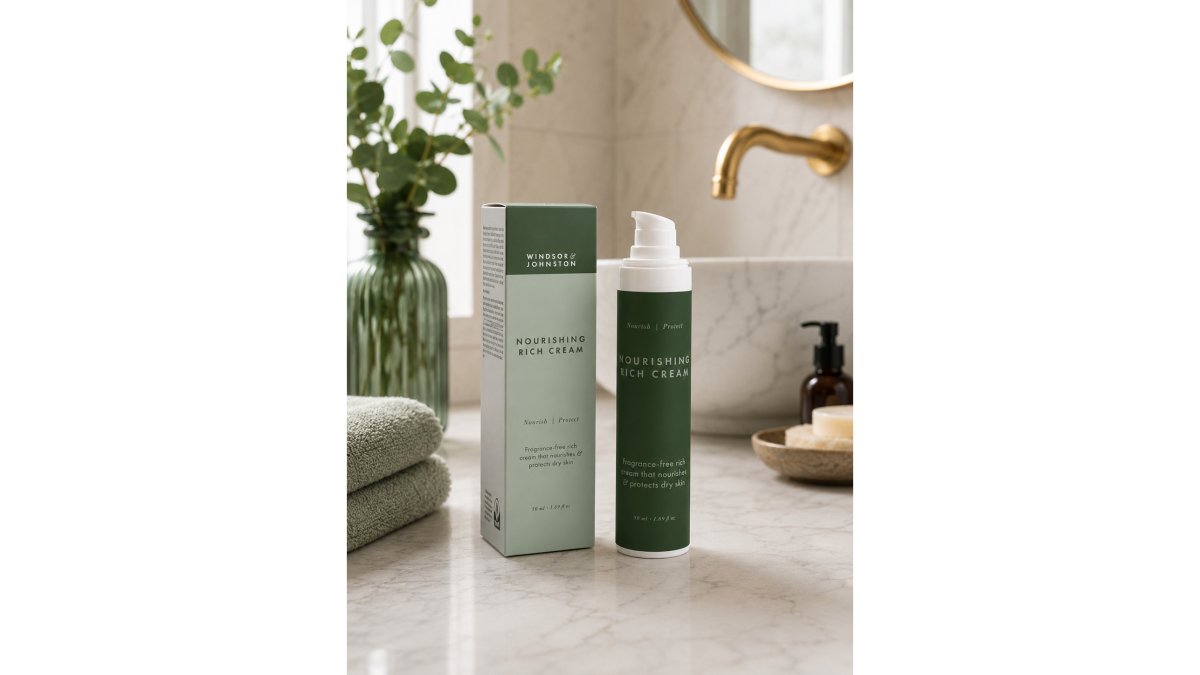
This is why we favour facial oils at Windsor & Johnston. Our Nourishing Facial Oil blends eleven organic oils, including jojoba and avocado, to soften and replenish dry skin. For a lighter option, the All-In-One Facial Oil locks in moisture without feeling greasy. If you prefer a cream, the Nourishing Rich Cream uses cocoa butter and argan oil to support the skin barrier.


Step 4: Adjust Bathing and Showering Habits
Shorter, cooler showers are the single fastest change most people can make to treat dry skin. Keep water warm rather than hot, and cut showers to under ten minutes.
- Add bath oil or colloidal oatmeal to bathwater instead of bubble bath
- Skip soap on everything except the areas that need it
- Pat dry with a towel rather than rubbing
Cold weather makes this harder, because hot showers feel good. Try warming the bathroom instead of the water.
Dry Skin Home Remedies That Actually Help
Dry skin home remedies work best when they support the barrier rather than replace your routine. The strongest options are simple, cheap, and backed by long use: colloidal oatmeal, honey, aloe vera, and plain plant oils. But 'natural' is not the same as 'safe for everyone,' and it helps to know which remedies have real support, which are mostly folklore, and how long to give any of them before deciding whether they work.
What the Evidence Says About Natural Ingredients
Some natural ingredients have real support, and others are mostly folklore. Here is the honest split.
Worth trying (good support or long clinical use):
- Colloidal oatmeal soothes itch and irritation and is widely used in dermatology. It is one of the few natural ingredients with a clear mechanism: it forms a protective film and contains compounds that calm irritated skin.
- Honey holds water in the skin and has mild antibacterial properties. Manuka honey is often cited, but any plain honey has humectant value.
- Jojoba and avocado oil soften skin and sit close to skin's own oils, so they are well tolerated by most people.
Use with care (works for some, irritates others):
- Coconut oil works for many people but clogs pores on some faces and can cause reactions in people with sensitive skin.
- Essential oils can irritate sensitive skin, even natural ones. Lavender and tea tree are common culprits; patch test before using them anywhere near the face.
- Lemon juice and baking soda are too harsh for dry skin, despite what you will read online. Both disrupt the barrier and can cause burns or irritation.
Patch testing, every time Before trying any new remedy, apply a small amount to the inner forearm and wait 24 to 48 hours. If there is redness, itching, or stinging, do not use it on your face or larger areas. This is especially important for essential oils, coconut oil, and anything with fragrance.
How Quickly Remedies Work and How to Tell If They Are Working
Natural remedies are not instant. A realistic timeline:
- Soothing itch: colloidal oatmeal and cool compresses can calm skin within minutes to hours.
- Softening and flaking: expect two to four weeks of consistent use before skin feels meaningfully softer.
- Barrier repair: four to six weeks of a gentle routine is a fair test. If skin is still tight and flaky after that, the routine, not the remedy, is usually the problem.
Signs a remedy is working: skin feels comfortable after washing, flaking decreases, and itch settles. Signs it is not: stinging, redness, new breakouts, or no change after a month. Stop anything that stings, and do not layer multiple new remedies at once, because you will not know which one helped or caused a reaction.
A Simple Oatmeal Mask
Mix two tablespoons of finely ground oats with warm water and a teaspoon of honey. Leave on for ten minutes, rinse with lukewarm water. It soothes itch without stripping skin. Use it once or twice a week, and patch test the honey first if you have sensitive skin.
How to Soothe Itchy Dry Skin and Irritation
To soothe itchy dry skin, cool the area, apply a fragrance-free moisturizer, and avoid scratching. Itch usually means the barrier is damaged, so calming the skin matters more than willpower.
Try these in order:
- Apply a cool compress for five minutes
- Follow with an unscented oil or rich cream while skin is damp
- Wear soft cotton over the area instead of wool
If itch keeps you awake or the skin is broken, that's a signal to see a doctor rather than treat it at home.
Dry Skin vs Eczema: When to See a Doctor
Dry skin is a temporary moisture problem. Eczema is a chronic inflammatory condition, and it needs medical care.
Signs it may be more than dry skin:
- Intense itch, especially at night
- Red, inflamed or weeping patches
- Cracked skin that bleeds
According to NHS guidance on eczema, persistent or severe symptoms should be checked by a doctor or pharmacist. The American Academy of Dermatology also notes that daily moisturizing is a core part of managing eczema alongside medical treatment.
For general skin care guidance, the British Association of Dermatologists publishes patient information on dry skin and barrier care.
Dry skin rarely needs a complicated routine.
At Windsor & Johnston, we make organic, vegan and cruelty-free skincare in small batches from the Yorkshire countryside.
Frequently Asked Questions
Can you treat dry skin naturally at home?
Yes, most everyday dry skin responds well to home care. The core steps are cleansing with a gentle, non-foaming cleanser, moisturizing while skin is still slightly damp, and keeping showers short and warm rather than hot. Layering a humectant, an emollient and an occlusive ingredient helps lock in hydration. If dryness persists after two to three weeks of consistent care, or comes with redness, cracking or intense itch, see a doctor to rule out eczema or another condition.
Which natural ingredients can help soothe dry skin?
Several plant oils and butters are well suited to dry skin. Jojoba oil and avocado oil are emollients that soften flaking skin, while shea butter and cocoa butter act as occlusives that slow moisture loss. Aloe vera and honey are humectants that draw water into the skin. Colloidal oatmeal is a long-standing soothing ingredient for itch. Patch test any new oil on your inner arm for 24 hours first, especially if your skin is sensitive or reactive.
How often should you moisturize dry skin?
Twice a day is the baseline: once in the morning and once in the evening. The evening application matters most because it repairs the skin barrier overnight. Apply moisturizer within a few minutes of washing your face or stepping out of the shower, while skin is still damp, so the product traps that water. If your skin feels tight by mid-afternoon, add a third application rather than waiting for flaking to start.
When should you see a doctor about dry skin?
Book an appointment if dryness does not improve after a few weeks of gentle cleansing and regular moisturizing. Also seek help if you notice cracked skin that bleeds, widespread redness, intense itching that disturbs sleep, or patches that spread. These signs can point to eczema, psoriasis or an allergy rather than simple dryness, and they need a proper diagnosis. A doctor can also check whether a medication or an underlying condition is contributing.